
Overline

❤️ Attachment Styles

Why Do We Love the Way We Do?

The way you connect with other people didn’t begin in your first relationship.

❤️Attachment Styles
The way you connect with other people didn’t begin in your first relationship.
It began long before that.
As children, our brains learned how safe it was to depend on others, express emotions, ask for comfort, or trust that someone would be there when we needed them.
Those early experiences helped shape our attachment style—a pattern of thinking, feeling, and behaving in relationships.
The important thing to remember is this:
Your attachment style is not your identity.
It’s a pattern your brain learned through repetition.
And just like any learned pattern…
It can change.
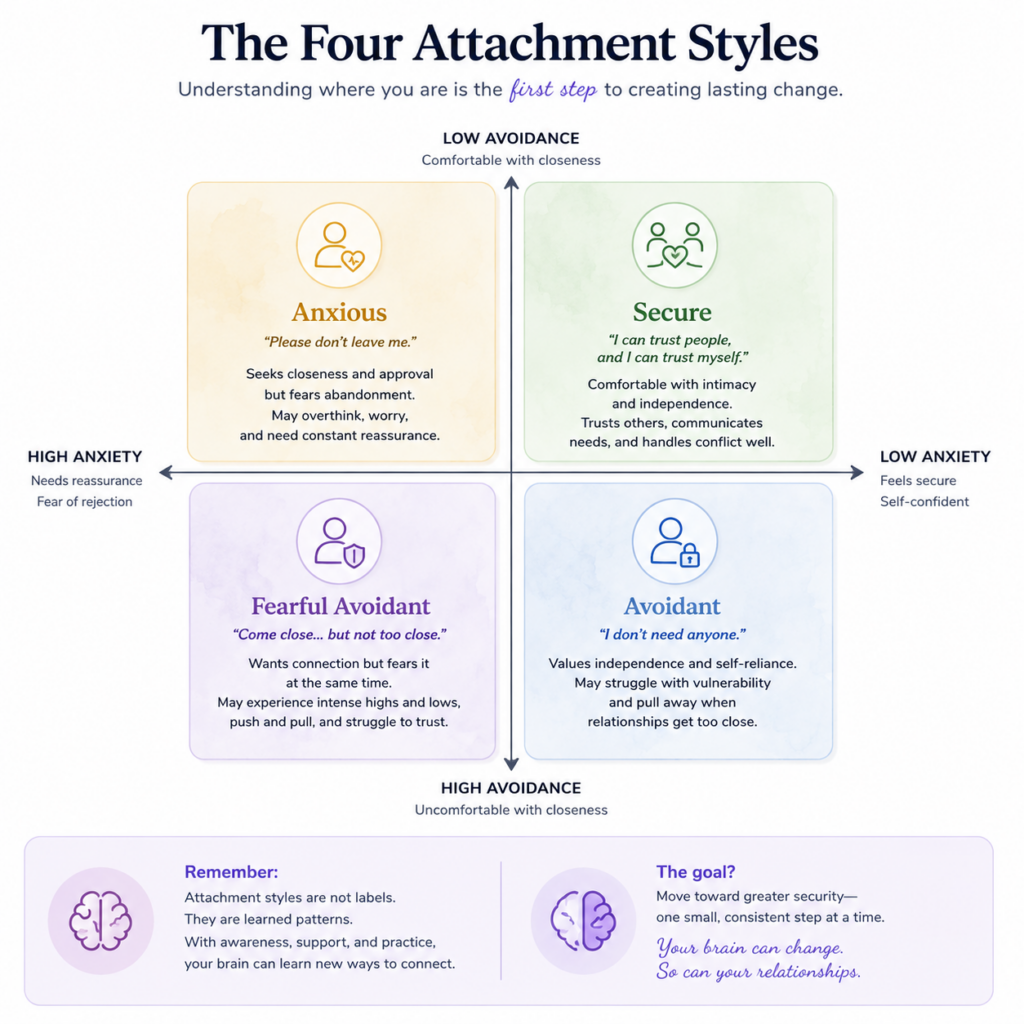
What Is Attachment?

Attachment is your brain’s way of answering one question:

“Am I safe with this person?”

When the answer feels yes, your nervous system relaxes.

When the answer feels uncertain, your brain shifts into protection mode.

Different people learned different ways to protect themselves.

🟢 Secure Attachment

“I can trust people, and I can trust myself.”

People with a secure attachment style generally feel comfortable with closeness while also maintaining independence.

They communicate openly, recover from conflict more easily, and don’t constantly question where they stand.

Common traits

✔ Comfortable with intimacy

✔ Healthy boundaries

✔ Trusts others

✔ Communicates needs

✔ Doesn’t fear healthy conflict

🟡 Anxious Attachment

“Please don’t leave me.”

When connection feels uncertain, the nervous system becomes highly activated.

The brain begins scanning for signs of rejection.

Small changes can feel enormous.

You might notice:

• Overthinking texts

• Constant reassurance seeking

• Fear of abandonment

• Feeling responsible for keeping the relationship together

• Jealousy

• Difficulty relaxing when communication changes

The goal isn’t “being needy.”

The goal is feeling safe.

🔵 Avoidant Attachment

“I don’t need anyone.”

For some people, closeness once felt overwhelming or unsafe.

Their brain learned that independence meant protection.

They often care deeply about others—but may struggle to express vulnerability.

You might notice:

• Pulling away after intimacy

• Difficulty expressing emotions

• Valuing independence above everything

• Feeling trapped in relationships

• Needing lots of space after conflict

This isn’t because they don’t care.

It’s because closeness can activate their nervous system.

🟣 Fearful Avoidant (Disorganized)

B“Come close… but not too close.”

This attachment style often feels like wanting connection while simultaneously fearing it.

Someone may crave intimacy one moment and withdraw the next.

Relationships can feel confusing because both the attachment system and the threat system become activated.

You might notice:

• Intense emotional highs and lows

• Fear of rejection

• Fear of vulnerability

• Pulling away after getting close

• Difficulty trusting others

• Feeling emotionally exhausted

Many people with this attachment style experienced inconsistent safety growing up.

Their brain learned that love and pain sometimes arrived together.

Why Attachment Styles Matter

Attachment styles influence far more than dating.

They affect:

❤️ Romantic relationships

👨‍👩‍👧 Family relationships

👥 Friendships

💼 Workplace interactions

🧠 Self-esteem

💬 Communication

🛡️ Boundaries

Attachment Is About Protection

One of the biggest misconceptions is that attachment styles describe personality.

They don’t.

They describe survival strategies.

Every attachment style developed because it helped someone adapt to their environment.

Your brain wasn’t trying to make your life harder.

It was trying to keep you safe.

Can Attachment Styles Change?

Yes.

This is one of the most hopeful discoveries in neuroscience.

Because the brain is capable of neuroplasticity, attachment patterns can become more secure over time.

This happens through repeated experiences of safety, emotional awareness, healthy relationships, and intentional practice.

You’re not trying to become someone else.

You’re teaching your brain that connection doesn’t always have to feel dangerous.

Questions to Reflect On

Ask yourself:

  • Do I become anxious when someone pulls away?
  • Do I find it difficult to depend on others?
  • Do I push people away when they get too close?
  • Do I worry that I’m “too much” or “not enough”?
  • When conflict happens, do I move toward people—or away from them?
  • Which attachment style feels most familiar to me?

Remember, attachment styles are patterns—not labels.

Understanding your patterns isn’t about judging yourself.

It’s about becoming aware of them so you can begin creating new ones.